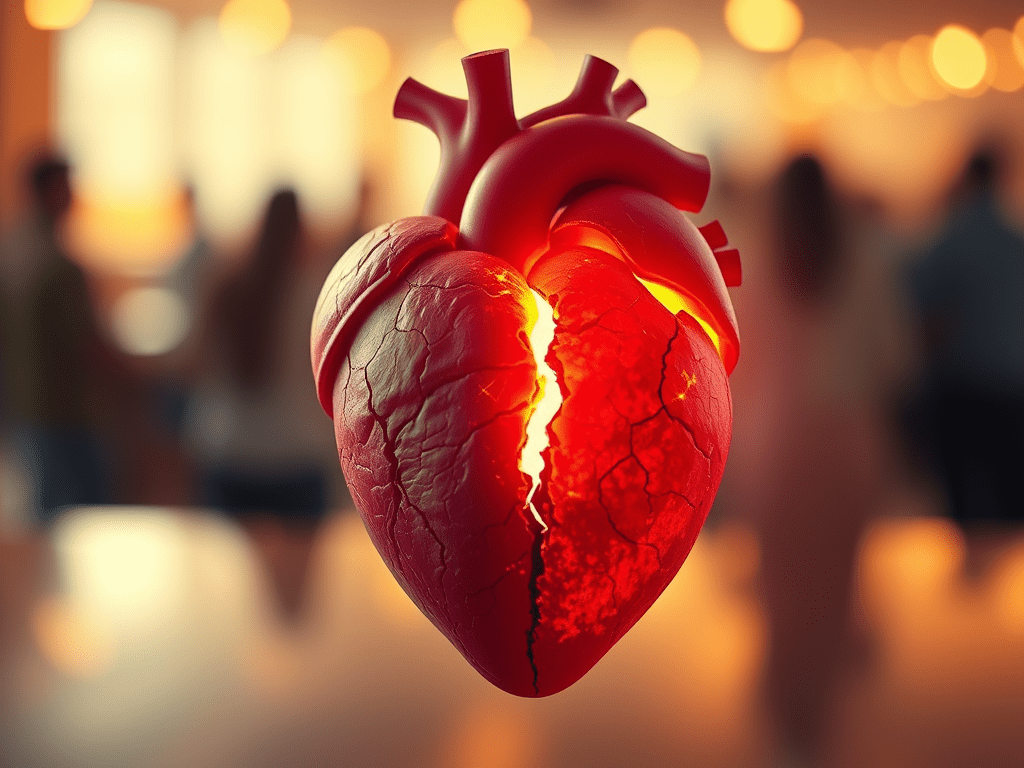
Have you ever had your heart broken, felt left out, or lost someone you love?
That heavy, aching feeling in your chest isn’t just “in your head.”
Your brain feels emotional pain the same way it feels physical pain.
Yes, the same parts of the brain that light up when you stub your toe also react when you’re excluded or rejected.
Connection Isn’t Just “Nice to Have”. It’s a Need

For years, we’ve been told that we need food, water, and shelter to survive.
But Dr. Matthew Lieberman, a UCLA neuroscientist, discovered something extraordinary:
Our need for connection is just as deep, maybe even deeper.
Through more than a decade of groundbreaking brain research, Lieberman found that:
- When we’re not busy with a task, our brain’s default network switches on, and it doesn’t rest.
- Instead, it uses that time to understand people, relationships, and our place in the world.
- By the age of ten, we’ve already spent over 10,000 hours learning how to read people’s faces, voices, and emotions. That’s the same number of hours it takes to master a skill like chess or playing the violin!
We are literally built to connect.
Why Rejection Hurts Like a Bruise
In one famous UCLA study (Eisenberger & Lieberman, 2003), people played a simple virtual ball game.
Halfway through, the other “players” stopped throwing the ball to them.
They weren’t really being rejected by real people… but their brains didn’t know that.
Their anterior cingulate cortex, the same area that registers physical pain, lit up.
Their bodies felt hurt even though no one touched them.
This is why emotional pain can feel like a punch to the chest or a tight knot in your stomach.
It’s not a weakness. It’s biology.

Superpower of the Social Brain

Humans are amazing at “reading minds.”
We can look at someone’s face and sense what they’re feeling.
We imagine what others might think or hope.
This superpower lets us:
- Work together as teams,
- Build families and friendships,
- Create societies that care for each other.
It’s also why, when that connection is missing, it hurts so much.
Our brains evolved to keep us close, not alone.
The Power of Small Moments
The good news?
Connection doesn’t have to be big, fancy, or expensive.
Even the tiniest moments of connection can light up the brain like sunshine after a storm.
Here are simple ways to connect every day:
- Genuine smile– a real smile can melt walls faster than words.
- Eye contact – it says, “I see you.”
- Shared laughter – it bonds people like glue.
- Be curious – ask someone about their day.
- Learn names – and use them. It makes people feel seen.
Try it today. Smile at someone. Ask them how they are.
You might just make their brain (and yours) a little happier.
Final Thought: Connection Is Medicine

We may live in a world full of screens, but nothing replaces a real human moment.
Our brains are wired to connect not just to survive, but to thrive…sometimes. 😊
The next time you feel hurt after being left out or misunderstood, remember:
That pain is real. Your brain is protecting something precious, your need to belong.
And the best way to heal? A small, real, human connection.
So, start with a smile. 😊
 Holistic Physio Osborne Park | Chronic Pain & Clinical Pilates – Design To Move
Leave a comment