
The nocebo effect refers to adverse events caused by negative expectations and learning processes that influence pain perception. This phenomenon involves changes in descending pain pathways and highlights the powerful connection between the mind and the body when it comes to pain modulation. Over the last few decades, research has uncovered behavioural, psychoneurobiological, and functional changes that occur during nocebo-induced pain.
The Psychological Basis of the Nocebo Effect
Psychological and neuroscience researcher Giuliana Mazzoni from the University of Hull, UK, has explored how our perception of pain is shaped by internal beliefs and external influences. Mazzoni states:
“Pain is a very subjective experience and the amount of pain that people experience is due to a series of internal convictions and external factors that modulate those convictions, not just the intensity of the pain stimulation.”
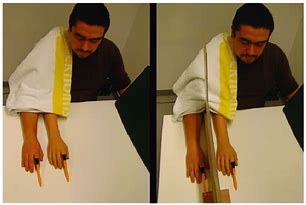
To investigate this further, Mazzoni used the Rubber Hand Illusion experiment to trick the brain into perceiving sensations in a fake limb. Here’s how the experiment worked:
- The participant’s real arm was hidden, and a rubber hand was placed in front of them.
- Through conditioning (stroking both the real and rubber hand), participants began to “feel” sensations in the rubber hand.
- Painful sensations were applied to the rubber hand using a contact thermode device (delivering five seconds of heat).
- A placebo cream, described as having analgesic properties (though it did not), was applied to both the real and rubber hand.
Key Findings:
This demonstrated that pain perception can be externally modulated purely by influencing psychological expectations.
Participants reported reduced pain in the rubber hand after the placebo cream was applied.
The Biological Basis of the Nocebo Effect
The nocebo effect is not just a psychological phenomenon; it has a clear biological basis. According to neuroscience researcher Christian Büchel, who studies these effects using functional magnetic resonance imaging (fMRI):
“Maybe 10 or 15 years ago, [placebo and nocebo effects] were considered to be magical things that were only in the imagination. Now, with many studies, we know they have a biological basis and you have to take them seriously.”
Neurobiological Changes in Pain Modulation
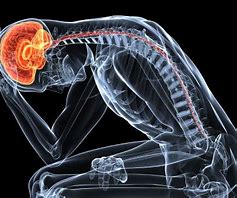
Research has shown that nocebo and placebo effects involve neurobiological changes across multiple levels of the nervous system:
- Brain Cortex and Sub-Cortex: Regions involved in the processing and perception of pain.
- Spinal Cord: Plays a key role in transmitting pain signals.
- Periaqueductal Gray (PAG): Known as the brain’s pain modulation control center.
These areas work together to amplify or reduce pain signals based on psychological and environmental factors.
Factors Influencing the Nocebo Effect

Negative expectations can arise from various sources, leading to amplified pain perception. These factors include:
Conscious and Nonconscious Learning Processes: Conditioning and associations formed over time.
Verbal Suggestions: Being told to expect more pain.
Past Experiences: Previous encounters with painful stimuli.
Observing Others in Pain: Witnessing pain in others can influence expectations.
Environmental Cues: Behaviors of healthcare providers, medical devices, and clinical settings can contribute to negative expectations.
Genetic Variants: Some individuals are genetically more prone to nocebo effects.
Personality Traits and Psychological Factors: Susceptibility may differ based on individual traits and coping mechanisms.
Implications and Future Directions
The nocebo effect demonstrates how negative expectations can lead to actual physiological changes that amplify pain signals. This has significant implications for pain management and clinical practice:
Improving Clinical Outcomes: By reducing negative expectations, healthcare providers can help mitigate unnecessary pain and discomfort.
Identifying At-Risk Patients: Developing tools to identify individuals who are more vulnerable to the nocebo effect.
Optimizing Clinical Interactions: Creating a positive and supportive psychosocial environment during medical treatment.

Final Thoughts
Further research is essential to develop strategies that address the nocebo effect. Understanding this phenomenon can improve pain management approaches and ultimately lead to better therapeutic outcomes for patients.
 Holistic Physio Osborne Park | Chronic Pain & Clinical Pilates – Design To Move
Leave a comment