
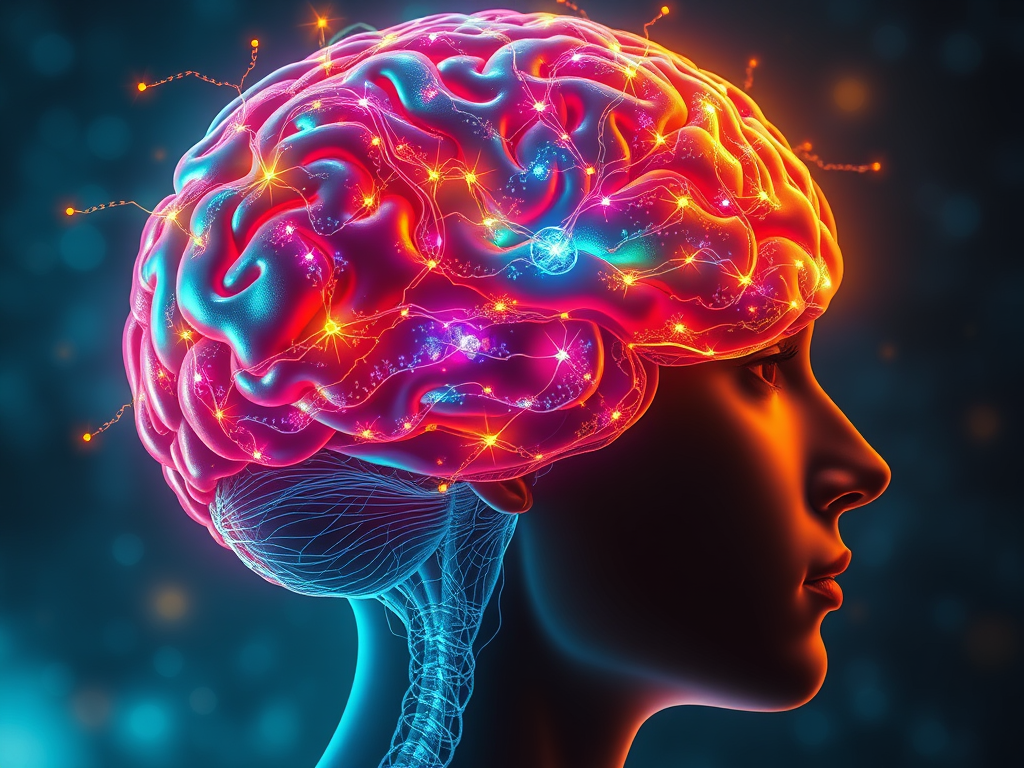
What is a Thought?
A thought could be something you consciously tell yourself, like “I don’t want to get out of bed,” but its origin isn’t always obvious.
Thoughts might be triggered by external stimuli (e.g., an alarm clock) or internal memories.
How Thoughts Affect the Brain and Body

Thoughts have a real impact on both the brain and body. For example:
Decisions involve different brain networks competing to determine the final action.
Negative thoughts (like stress) can worsen illness/pain.
Fearful thoughts trigger the fight-or-flight response by releasing chemicals like adrenaline.
Anatomy of a Thought
When you think, several brain areas and processes engage:
Synapse: A gap where signals pass between neurons.
Prefrontal cortex: Involved in planning and decision-making.
Hippocampus: Plays a role in memory.
Neurons: Cells that transmit information via electrical impulses.
Neurotransmitters: Chemicals (e.g., dopamine, norepinephrine) that facilitate neuron communication.
Thoughts and Emotions Are Linked

Emotions can shape your thoughts and vice versa:
Optimistic thinking supports better immunity.
Depressive thoughts may weaken immune responses.
Fear can trigger chemical changes like adrenaline release.
This shows how thoughts can affect physical well-being. Adjusting thoughts can also change how your body reacts emotionally and responds to pain.
Changing Thoughts Can Change Behavior
Identify triggers:
Start by recognizing situations or events that trigger negative thoughts. For instance, if hearing your alarm in the morning prompts the thought, “I don’t want to get up,” consider adjusting the trigger (like changing the alarm tone) or reframing your response. If a thought like, “I’m in too much pain to do anything,” comes up, ask yourself whether this is entirely true or if there’s still something you can manage.
Challenge negative thoughts:
Replace automatic negative thoughts with more balanced and realistic ones. For example, instead of thinking, “Getting up early is terrible,” try, “It’s early, but getting up now helps me accomplish more.” Or if you’re struggling with discomfort, shift from “I can’t do anything” to “Today is hard, but I’m taking steps to feel better.”
Feed your brain positive input:
Actively surround yourself with positive ideas, and try supportive conversations, to encourage healthier thought patterns. Reading, listening, and interacting with content that supports a positive mindset can reinforce your efforts.
Over time, this process of cognitive rewiring can create lasting change, helping your brain adopt healthier responses and form more constructive habits.

Impact of Brain Damage and Disease

Brain injuries or diseases (like Alzheimer’s, Parkinson’s, or stroke) impair specific mental functions, including:
- Self-awareness, memory, impulse control, attention, and decision-making.
Physical effects (like headaches, fatigue, pain and mental fog) also influence thinking and behaviour.
A Final Thought
- The mind-body connection means thoughts are not just abstract concepts—they produce real physical effects.
- Cognitive therapies like Cognitive Behavioral Therapy (CBT) use this principle by helping people change negative thought patterns, which can have both mental and physical benefits over time.
By becoming aware of your thoughts and their triggers, you gain the ability to reshape your thinking and improve your emotional and physical health including pain.
 Holistic Physio Osborne Park | Chronic Pain & Clinical Pilates – Design To Move
Leave a comment