
What is the Biopsychosocial Model?
In the past, medical care was centered almost exclusively on biology. If a body part was injured, the focus was simply on repairing that isolated area. The idea was that fixing the physical issue would naturally restore overall health. However, we now understand that true healing often requires a more comprehensive approach—one that includes not only our bodies but also our minds and social experiences. This approach, called the Biopsychosocial Model, considers the biological, psychological (mood, behavior), and social (relationships, culture) aspects of each person’s experience.
Interestingly, this idea has been embraced in many Eastern cultures for centuries. In the West, though, we’ve only recently begun to see its potential for fostering deeper, more sustainable healing.
Why Should Pilates Teachers Use This Approach?
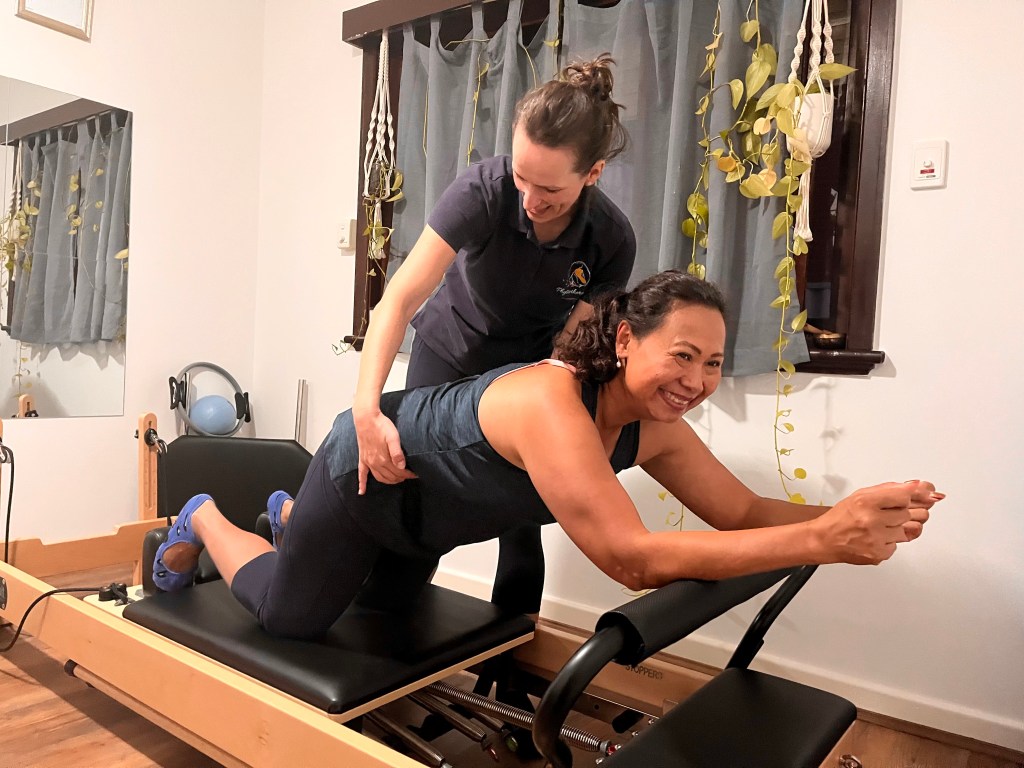
For Pilates instructors, adopting the Biopsychosocial Model can open new avenues for connecting with clients in meaningful ways. Instead of only addressing physical pain, like a sore knee, this approach encourages instructors to consider the bigger picture: stress levels, sleep quality, and emotional well-being. When people feel understood and supported as whole individuals, they’re often better able to reach their goals and enjoy the journey.
Social context also plays a significant role in well-being. Personal experiences, like a recent breakup or a new relationship, can affect a person’s physical and emotional health. By acknowledging and integrating the biological, psychological, and social aspects of a person’s life, Pilates instructors can build a deeper, more trusting relationship with their clients. This approach allows clients to feel truly seen—not just as a collection of symptoms but as whole, complex individuals.
How Do Stress and Trauma Affect Pain?
Pain is rarely just about the body. Let’s take a minor injury, like a small bite from a squirrel. At first, it’s simply a physical issue, but soon it could lead to financial stress from medical bills, missed days of work, and even a lingering fear of going outside. Even after the wound has healed, just brushing against the scar might trigger not only discomfort but also anxiety and memories tied to the initial event.
When we recognise how mental and emotional factors contribute to pain, we’re better equipped to help people find relief. For instance, if someone arrives for a Pilates session feeling stressed, incorporating breathwork or gentle movements to calm their nervous system could be more beneficial than jumping straight into intense exercises.

How Can Pilates Teachers Apply the Model in Practice?
Pilates instructors can use the Biopsychosocial Model by tuning into both verbal and non-verbal cues to understand what each person is experiencing. Stress, for example, might show up in a client’s posture, their energy level, their tone of voice, or even in avoiding eye contact. By noticing these signs, instructors can tailor each session to fit the client’s physical and emotional needs.
Every session can include goals for both the body and mind. An uplifting routine might be the priority for a client in a low mood. For someone who seems stressed or tense, the focus might shift to calming exercises. This kind of thoughtful, personalized approach helps clients feel more supported and understood.
A Holistic Path to Wellness
The Biopsychosocial Model gives Pilates instructors a powerful framework for helping people heal holistically. By recognizing that pain isn’t just physical—it’s influenced by our thoughts, emotions, and relationships—we can create a more compassionate and effective experience for each person. When clients feel seen and cared for as whole beings, the journey to overcoming pain becomes one of connection, resilience, and lasting well-being.
 Holistic Physio Osborne Park | Chronic Pain & Clinical Pilates – Design To Move
Leave a comment